Winter boots that really keep you warm: the criteria
Which winter boots really keep you warm? Lining, sole, width and moisture protection as criteria, plus the CI test as a rating and care tips.
Contents
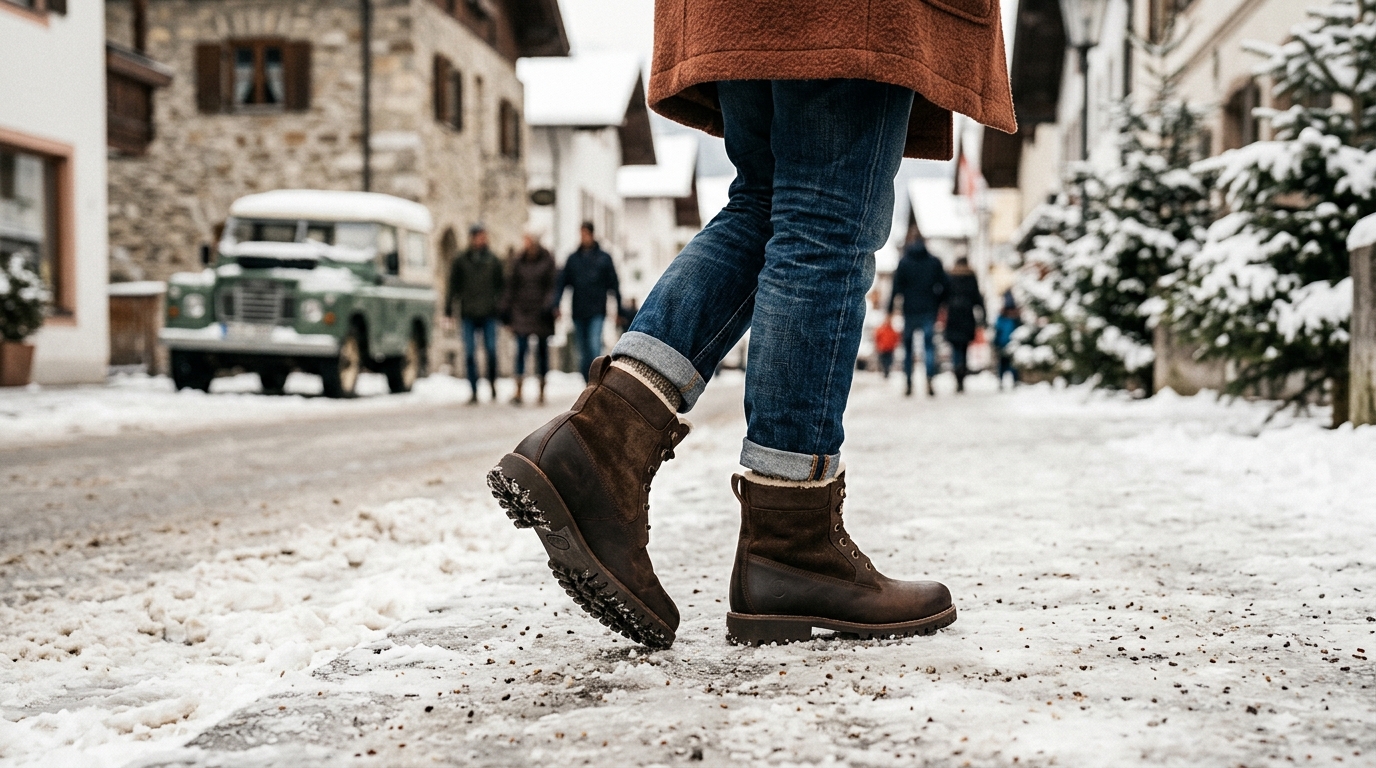
Which winter boots keep you properly warm?
Winter boots keep you properly warm when they combine four things: a warming lining, an insulating sole, protection from moisture and a fit that allows air around the foot. The Bergzeit guide to winter hiking boots names exactly these criteria: a lining, such as fleece or plush, traps warm air close to the foot, and a thick sole protects against the cold of the ground.[1] The boot must be neither too tight nor too loose, because only then can the air around foot and sock warm up.
You can tick the criteria off as a table in the shop:
| Criterion | What to look for | How you notice it |
|---|---|---|
| Warmth | Lining made of fleece, plush or a similar material | The boot feels warm after a few minutes without the foot sweating |
| Sole | Thick sole made of rubber or caoutchouc, with tread | The ground does not feel cold, the sole grips on snow and ice |
| Moisture | Waterproof membrane or a well-impregnated upper | The boot stays dry inside, even in slush |
| Fit | Neither too tight nor too loose | Air around toes and sock, no pressure |
| Shaft | High shaft or integrated gaiter | Snow cannot get into the boot from above |
The values in the “Warmth” and “Sole” rows come from the Bergzeit guide; manufacturers mix the materials in different ways. How membranes work is explained in our comparison of Gore-Tex and alternatives.
Which winter boots really keep women's feet warm
Women's boots keep you warm for the same reasons as any other winter boot: lining, sole, width and moisture protection decide, not the “women's” label. If you are looking for a pair, first define the intended use, because that determines how much insulation you need.
- Short trips in the city: an insulated boot with a closed upper and a treaded sole is usually enough.
- Long distances in snow: a high shaft or gaiter, a thick sole made of rubber or caoutchouc and a membrane.
- Being active outdoors: according to Bergzeit, in winter ordinary shoes with thicker wool socks are often sufficient. But the shoes must not be too tight with the socks, otherwise cold feet are guaranteed.[1]
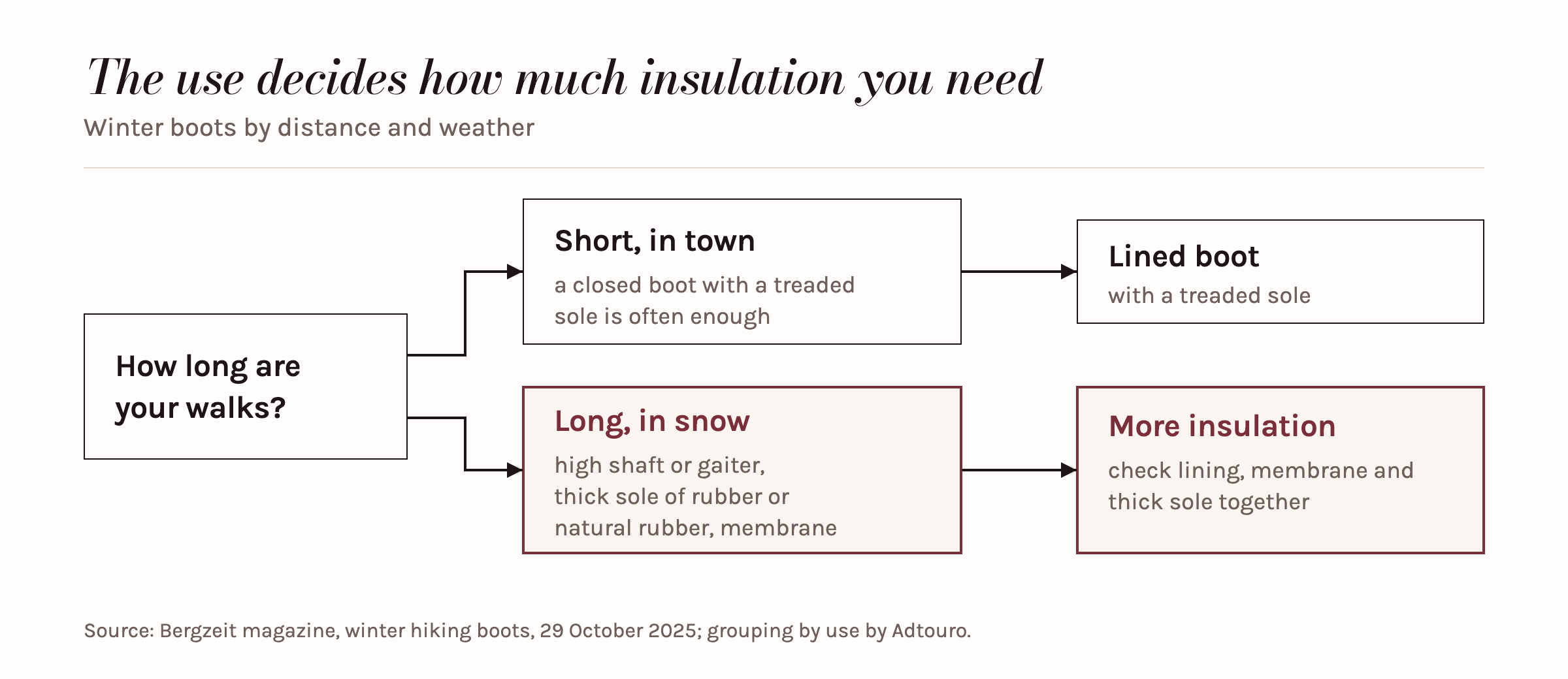
The note about socks is practical: if you try a pair on with thick socks, you buy a size that will not pinch later.
Which winter boots are the warmest
The warmest winter boots are those where lining, sole and shaft are all designed for cold together, not a single material. None of the sources reviewed names a standardised warmth scale for everyday boots. The only documented measure is the CI test, which comes from the safety footwear standard: at −17 °C, the insole may lose no more than 10 °C of temperature after 30 minutes.[2] The testing laboratory CTC measures the temperature drop at the insole inside the shoe at −17 °C; the test is defined in EN ISO 20344 and EN ISO 20345.[3]
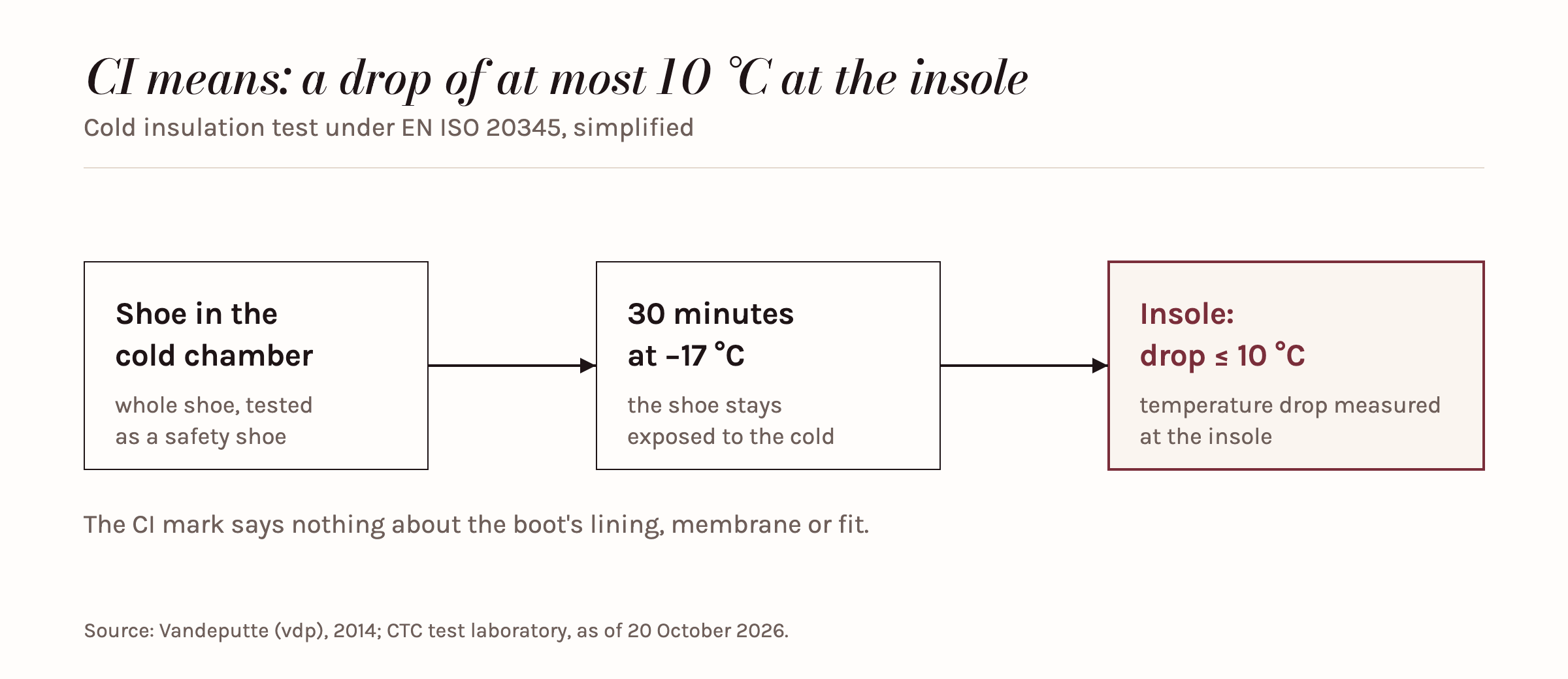
What this means for your buying decision: a CI marking documents the cold insulation of the sole according to this test, but it says nothing about the lining or water protection. Manufacturer temperature ratings without a test reference are therefore a rough guide, not a measure. For cold from below, Bergzeit also points to the sole material: rubber or caoutchouc does not conduct the cold further.[1]
Which winter boots are the best
Which winter boots are best depends on intended use, your feet and your budget; there is no general ranking. Adtouro has not tested the models on this market itself and therefore names no brands. You can decide using the criteria above and these questions:
- What do you need the pair for: city, a walk in the snow, or long distances?
- How often do you stand still outdoors? According to Bergzeit, in winter normal shoes with thick socks are often enough when you are moving. If you stand for long periods, do not transfer this advice and rather choose more insulation (a conclusion drawn from that statement).
- How much care do you want to put in? Leather needs something different from textile with a membrane.
- Does the boot fit with the socks you wear in winter?
- Does the sole have a tread that grips on snow and ice?
With leather, care is worth a closer look. According to ZDFheute, leather that has got wet should always dry in the air; heaters and direct sun are off limits because they can dry out the material and make it brittle.[4] Suede must not be cleaned with water and should be impregnated right after purchase, repeated regularly. More on this in our leather care section.
Insulated winter boots for women
Insulated women's boots make sense if you stand or walk outdoors for long periods. Bergzeit names fleece or plush as warming lining.[1] For winter hiking boots, however, Bergzeit says a lining is not mandatory: thicker wool socks can replace it when you are moving, provided the boot does not become too tight as a result.
How to check an insulated pair:
- Try them on with the winter clothing you actually wear, i.e. with thick socks.
- Do not just feel the lining — check whether it extends all the way into the toe area.
- Pay attention to seams, lacing and the top edge of the shaft: moisture often gets in there, as our membrane comparison shows.
- After wet days, let the boots dry in the air, not on the heater.
If you want to compare further, you will find articles in our boots section. Choose your boots by intended use and the criteria above, not by a best-of list.
Frequently asked questions
How warm do insulated winter boots keep you?
That depends on the lining, the sole and the fit. A lining traps air around the foot, but it only works if the width is right.
What does CI mean on shoes?
CI stands for cold insulation according to the safety footwear standard: at −17 °C, the insole may lose no more than 10 °C of temperature after 30 minutes.
What keeps feet warmest in winter?
An insulating sole made of rubber or caoutchouc, a warming lining and, if in doubt, thicker wool socks — provided the boot does not become too tight as a result.